
We can – and should – cut development charges, but only if there's a way to replace the revenue
Cuts to development charges could help thaw a frozen market

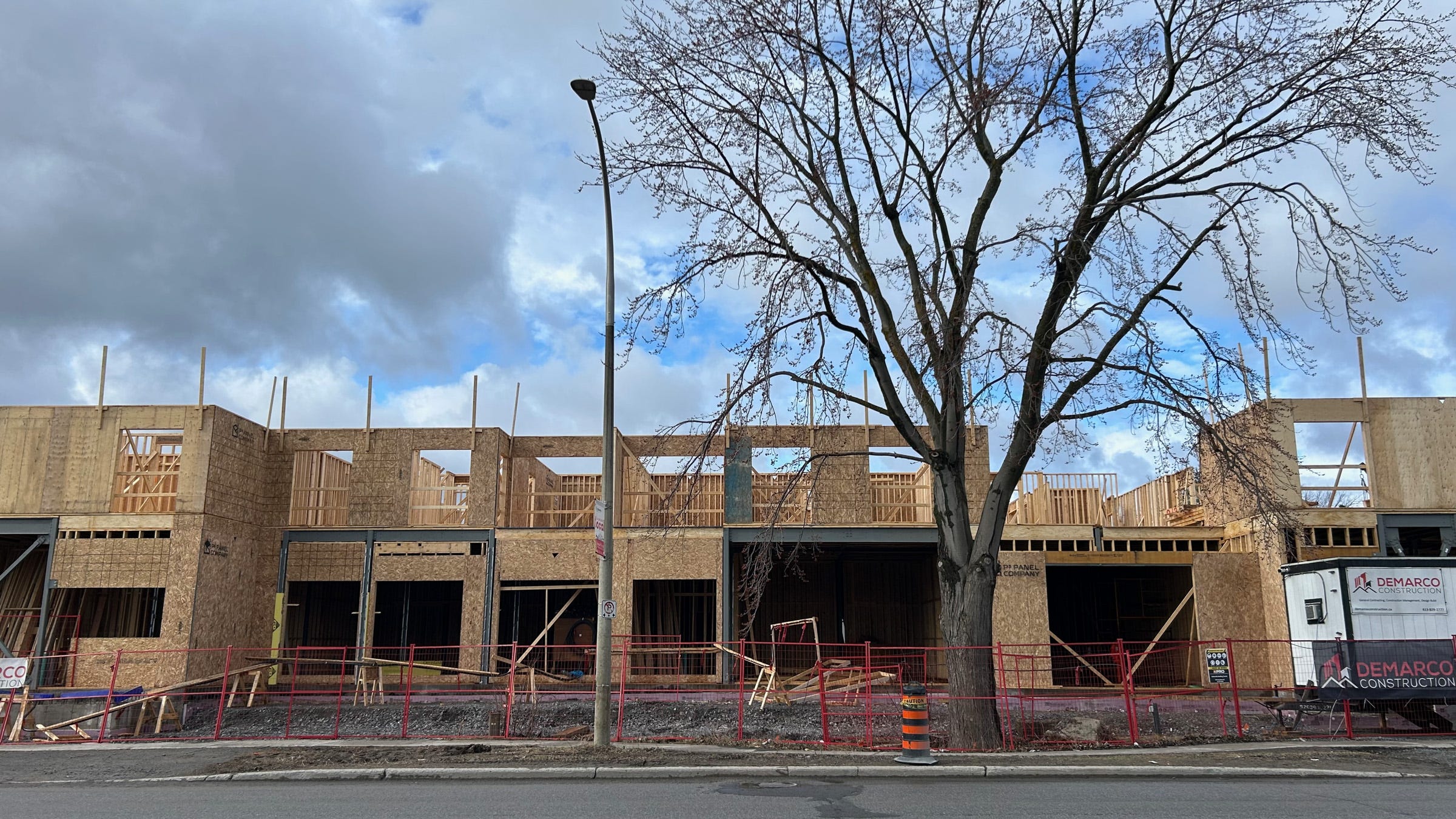
I was going to write an explainer piece about Ottawa’s Housing Accelerator Plan, and last week’s progress update at committee.
But Andrew Pinsent has already written a great summary! So go read that: “Ottawa Housing Acceleration Plan can’t outrun the markets”.
A snippet:
“The good news is that legitimate progress is being made on the plan itself: Of the 58 recommendations, more than half are complete, with the city on track to get to 78 percent by the end of this year.
But the update delivers a sobering bottom line alongside that progress.
Independent modelling from Bloomberg Associates finds virtually no typical housing development in Ottawa is financially viable right now, with high construction costs, interest rates, and a pullback by private capital all working against new builds.”
One change that would move the needle on housing starts would be to reduce municipal development charges (DCs). We should absolutely do that – but with a caveat.
Current Ottawa DCs are $57,827 for a single home inside the Greenbelt, and $64,634 for a single home outside. For a two-bedroom apartment, they’re $31,870 inside the Greenbelt and $34,752 outside.1
Those fees get passed on to renters as higher monthly rent, and to owners as a higher home price (plus extra cost for years to come as mortgage debt).
This raises all sorts of issues around equity, fairness, and priorities as Ontario faces a housing crisis. The right approach would be to substantially reduce DCs as soon as possible, and then phase in a complete elimination over the next decade.
Federal and provincial politicians have been calling for municipal DC cuts for years, and the development industry would welcome the move. But there’s a caveat: Other levels of government have to step up with an alternate funding source.
Ottawa’s DC revenue in 2025 was nearly $250-million, which gets used to fund new infrastructure like water pipes, sewers, major roads, transit, fire stations, libraries, and so on.
That’s a substantial amount of money for the City and not something that we can realistically shift to the property tax bill.
A potential solution: The provincial and federal governments say they want Ontario municipalities to cut DCs by up to 50%, and in return they’ll offer replacement money for infrastructure. They’ve earmarked $8.8-billion ($4.4-billion each) over the next ten years.
Exactly how this fund would work, and what qualifies, is not yet clear. They made the announcement at the end of March and we’re still waiting for details. I suspect it’s not nearly enough to fully offset the financial impact to Ottawa, but we’ll see.
(That uncertainty may actually be worsening the slowdown of housing starts, with developers holding off on projects while they wait to find out the details. Why start building now if you might save tens of thousands of dollars per unit if you wait a little longer?)
My colleague Steve Desroches noted that our city is but “a tiny ship in an ocean of economic forces”. We have advanced a ton of progressive, meaningful housing policy, process change, and economic incentives to spur more housing developments.
The other levels of government hold levers that are far, far more powerful.
Ottawa’s DCs are quite a bit lower than in Toronto and other GTA municipalities. ICFhome.ca has a calculator that compares DCs across different cities.
There is a lot of good in here. Some additional thoughts:
1. DCs are currently structured unfairly: more than half of the DCs for an urban infill project go to roads, sewers, transit and other "infrastructure" that already exists. If we want to meet our goal of urban intensification, as set out in the OP, we'd rethink this approach and greatly reduce (or eliminate DCs for infill.
2. DCs are only one of the issues. Additional items that make housing more expensive include:
a) requirements for amenity space: a 50 unit apt building requires 300 sq m of amenity space, at least half of which must be common. If the developer opts to make it all common, that's over 3,000 sq ft of games rooms, theaters, gyms and other amenity space that they are forced to build, operate and maintain; at current construction costs, that's in the range of $1.2-1.5m upfront, plus operating cost, and the loss of 4-6 rental apartments that generate income. This should be a choice, that developers may want to build to offer amenities to make their building more attractive, but should not be forced to (we didn't force this on developers in the hey-day of apartment construction in the mid-century); this is also especially true for thriving communities filled with cafes, libraries, parks and other 3rd spaces that serve as community amenities. Forcing the developer to build this space that then often get under used imposes a large cost and declining revenues.
b) high rise and other design guidelines are applied to rigorously: example, high rise guidelines limit towers to 750 sq m footprint; that is about 10-12 apts per floor; the same number of elevators, stairs and other "fixed" infrastructure could allow a building of 15-20 apartments; adding 5-8 units per floor x 20 floors would add 100-160 apartments per building, without adding the infrastructure needed for another building of 100-160 units; this would lower rents in each unit by 15-20% (more units served by the same infrastructure). We used to build great towers like this, with footprints much larger than ones we currently permit (the "mercedes" tower, for example on Richmond Road has a footprint of around 2,000 sq m; the towers at POW and Hogs Back each have footprints of hundreds of square meters).
c) Change the planning model. Site Plan Approval (SPA) currently takes, on average, in ON 23 months. It should take 3. Based on independent costing by Altus, done for the OAA (report available here: https://oaa.on.ca/knowledge-and-resources/government-relations/government-relations-detail/Site-Plan-Approval-is-Costly-for-Ontario-2024-Report) the cost of SPA delay adds around $6m in costs to the project. That is passed on directly to the end user (renter or buyer). The OAA has called for SPA reform since 2014 with little or no action by municipalities (unless forced to by Queens Park which has been ham-fisted in their approach).
3. Recognize the potential that exists around us: the city owns hundreds of parcels of land and land cost is one of the biggest single line items in a project. Launch design competitions for publicly owned land to be be designed and built for public benefit (retaining ownership via 999 year leases to non-profit and co-op housing developers). A design competition would engage the public, open the door to social transformation and could be completed in 3-6 months instead of the usual 3-5 year process of a city project (see my substack post on 330 Gilmore for an example: https://toondreessen930431.substack.com/p/carpe-diem?r=jkgft) and would stimulate the economy (architecture drives 17% of the ON GDP : https://oaa.on.ca/knowledge-and-resources/government-relations/government-relations-detail/Contribution-of-the-Architectural-Services-Industry-to-Ontarios-Economy-2024-Report); four six storey projects would have far greater impact, be delivered faster, and create better social value than a single 24 storey building.
4. Link sustainability with development projects: someone investing in a more sustainable building needs more capital to invest in things like mass timber, carbon neutral operations, etc...; deferring DCs (with interest) is expensive as it just kicks the can down the road. Structure, instead, a way for reasonable DCs to paid based on operating performance of the building over its lifespan: a more sustainable building might not have parking, or not use as much water or energy, reducing the need for services and infrastructure that DCs supposedly cover.